- Home
-
Company Profile
- About Us
- About Our Export
- What We Do
- Precision Machining Capabilities & Manufacturing Process
- Products We Manufacture: Precision Components & Work Holding Solutions
- Custom Manufacturing & OEM Engineering Solutions
- Industries We Serve
- Quality Assurance, Certifications & Standards
- Infrastructure, Technology & Manufacturing Facilities
- Our Products
- Blogs
- Contact Us

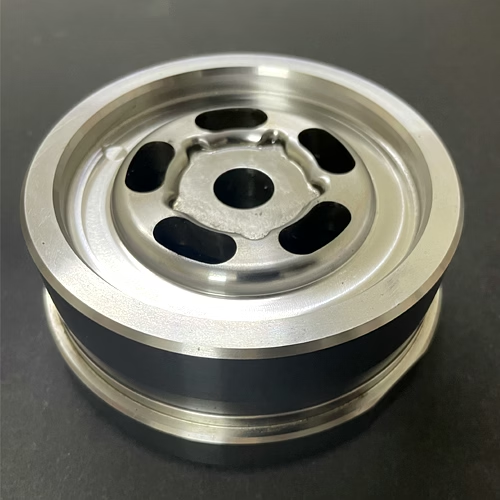

Forging Die
-
Product is not available
Brand:
Country Of Origin : India
Forging Die for Closed-Die Production
The forging die is a tooling component used in closed-die forging processes to shape heated billets into final parts. It is intended for forging shops, tool rooms, and OEM production planners who require durable, precision tooling for repeatable forging cycles. Die design affects flow lines, flash control, and final geometry.
We supply dies built to drawing with process-aware heat-treatment and finishing. Batch production and maintenance support are available. Provide CAD or 2D drawings to confirm die cavities and alignment features.
Applications and Buyer Fit
Forging dies are central to production of forged components for automotive, industrial, and heavy-equipment applications. Buyers include forging houses, OEM toolrooms, and contract manufacturers requiring robust dies that maintain cavity geometry under repeated thermal cycles.
Technical Considerations
Critical attributes include die steel selection, heat treatment process, cavity finish, parting line design, and support features. Specify material grade, expected cycle life, and billet properties when ordering. Proper die maintenance and controlled cooling reduce wear and extend tool life.
Supply and Manufacturing
Dies are produced to customer drawings. Manufacturing steps include machining, hardening, finish grinding, and trial fitting. Lead time depends on complexity and steel treatment cycles. Volume production planning is supported for scheduled replacements.
Quality and Documentation
We can provide process notes and inspection checkpoints for die acceptance. Include design intent and expected production volumes to optimize tooling life and maintenance planning.
Frequently Asked Questions
- What tolerance band and interface standard does this die support? Tolerances depend on die design and forging process; provide drawings and production intent for tolerance alignment. (tolerance_interface_fit)
- Can this die be produced to custom CAD drawings? Yes. We support build-to-print die manufacturing and trial fitting. (process_capability)
- What test reports or compliance evidence are available? Inspection checkpoints and process documentation can be supplied for acceptance. (certifications_compliance)
- What is lead time and packaging for this die? Lead time varies with steel procurement and heat treatment. Dies are packed to protect machined and hardened faces. (logistics_delivery)