- Home
-
Company Profile
- About Us
- About Our Export
- What We Do
- Precision Machining Capabilities & Manufacturing Process
- Products We Manufacture: Precision Components & Work Holding Solutions
- Custom Manufacturing & OEM Engineering Solutions
- Industries We Serve
- Quality Assurance, Certifications & Standards
- Infrastructure, Technology & Manufacturing Facilities
- Our Products
- Blogs
- Contact Us

Precision Machined Components


Cold Forging Punch
Cold Forging Punch for Industrial Forming
Cold forging punches are precision metal-forming tools designed to shape and blank workpieces under compressive loads at ambient temperatures. This punch variant is suited to OEM and production environments where repeatability and tool life are primary buyer concerns.
Key buyer signals include consistent dimensional repeatability and process stability for high-volume runs. Procurement teams typically evaluate punch geometry, wear resistance, and compatibility with existing dies and presses. Where required, production batches can be scaled and inspection checkpoints integrated to support ongoing supply programs.
For purchasing and specification, provide drawing references, target material, and expected run volumes. This facilitates quoting and helps match production process capability to the part requirement.
Price upon request

UV Barrel for Domestic and Commercial RO Machines
UV Barrel for Domestic and Commercial RO Machines
The UV barrel is a component housing designed to hold UV lamp assemblies within reverse-osmosis water treatment units. It serves both domestic and light-commercial RO systems, providing secure mounting and sealing for UV disinfection stages. Procurement teams and OEM integrators specify barrel dimensions to match lamp length and socket configuration.
Supply options include production runs for distributors and build-to-print orders for OEM integration. Protective packing and inspection support are available for batch shipments.
Price upon request

Cold Forging Die
Cold Forging Die for Production Runs
Cold forging dies are engineered cavities or tooling sets that shape workpieces under compressive load at room temperature. They form the matched interface to punches and must be specified with precise cavity geometry and finish to control final part dimensions.
Buyers evaluate die cavity tolerance, surface finish, and compatibility with press stroke and feeder systems. Maintenance and repeatability are central for production planning. When ordering, provide detailed part drawings and anticipated production volumes to align tooling design and inspection checkpoints.
Supply options include batch machining with inspection reporting. Dies can be delivered with recommended clearances and assembly guidance for integration into existing die stacks.
Price upon request

Cold Forging Die And Punches
Matched Cold Forging Die & Punch Sets
Matched die and punch sets are supplied as complementary tooling components designed to work together in forming and blanking operations. Specifying matched geometry ensures consistent part quality and reduces trial-and-error during press setup.
Procurement teams should supply assembly drawings, press parameters, and run-volume expectations. These inputs guide tooling fitment, tolerance allocation, and inspection planning. Matched sets are optimized for interchangeability and serviceability in production environments.
Batch supply options support prototype and production quantities, and inspection reports are available per delivery to confirm dimensional compliance.
Price upon request

Valve For Hydraulic Control Valve
Hydraulic Control Valve Component for Fluid Power
This valve component is intended for use within hydraulic control valve assemblies. It is specified where flow control, pressure regulation, or directional routing is required within a hydraulic circuit.
Procurement teams should identify system interface dimensions and operating pressure range when requesting quotes. Supplying these details enables verification of compatibility and helps define inspection checkpoints during production runs.
Supply options include batch production with inspection documentation suitable for OEM integration and assembly validation.
Price upon request

Valve For Hydraulic Control Valve Assly
Component for Hydraulic Control Valve Assembly
This component is intended for assembly into hydraulic control valves. It supports flow routing, pressure control, or directional functions when integrated into a valve stack or manifold assembly.
Buyers should provide assembly drawings and operating parameters so manufacturing can verify fit and sealing performance. Batch production can be arranged with inspection checkpoints to support assembly acceptance testing.
Supplying part-level documentation and intended system interfaces accelerates quoting and production planning.
Price upon request
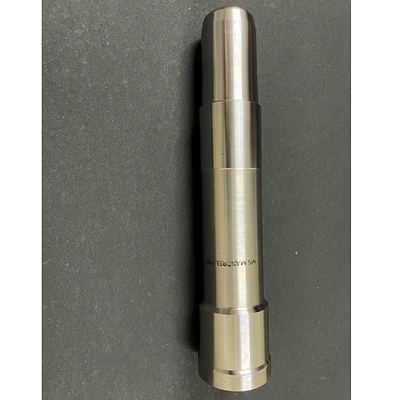
Mandrel
Mandrel for Precision Machining and Forming
The mandrel is a work-holding and forming arbor used in machining, rolling, or forming applications. It secures internal bores or supports components during secondary operations. Procurement teams and production engineers use mandrels to ensure concentric support and to maintain dimensional control during processing.
Orders are accepted to drawing and can be scaled from prototype to production. Inspection documentation and packing are provided to support production and assembly integration.
Price upon request
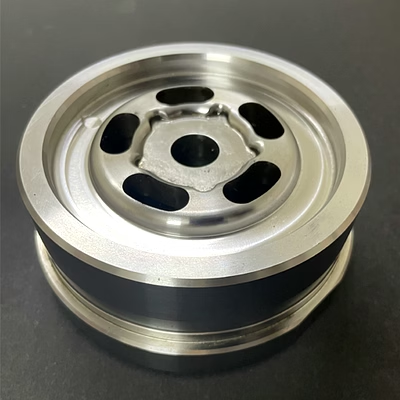
Forging Die
Forging Die for Closed-Die Production
The forging die is a tooling component used in closed-die forging processes to shape heated billets into final parts. It is intended for forging shops, tool rooms, and OEM production planners who require durable, precision tooling for repeatable forging cycles. Die design affects flow lines, flash control, and final geometry.
We supply dies built to drawing with process-aware heat-treatment and finishing. Batch production and maintenance support are available. Provide CAD or 2D drawings to confirm die cavities and alignment features.
Price upon request

Welding Saw Nozzle ETP Copper
Welding Saw Nozzle in ETP Copper
This ETP copper welding saw nozzle provides high electrical and thermal conductivity for welding and cutting equipment. It is selected for saw and welding torches where conductivity and thermal stability are critical. Buyers include OEMs and maintenance teams that manage equipment requiring reliable nozzle performance.
Supply supports batch production, OEM integration, and drawing-based manufacturing. Protective packing and inspection support are available for production lots to preserve finish and dimensional integrity.
Price upon request

Pin For Fuel Injection System
Pin For Fuel Injection System
This precision pin is designed for use in fuel injection system assemblies where secure positioning and consistent actuation are required. It suits OEM engine builders, maintenance teams, and assembly shops that require repeatable component geometry and reliable fit. The part is offered with process-controlled machining and inspection workflows that support batch traceability and dimensional validation.
Procurement-ready packaging and volume supply options support production ramps. Quality control follows documented inspection methods and the manufacturing process can integrate customer drawings for build-to-print runs. Typical buyer signals include OEM sourcing, scheduled replenishment, and integration into fuel delivery sub-assemblies.
Price upon request
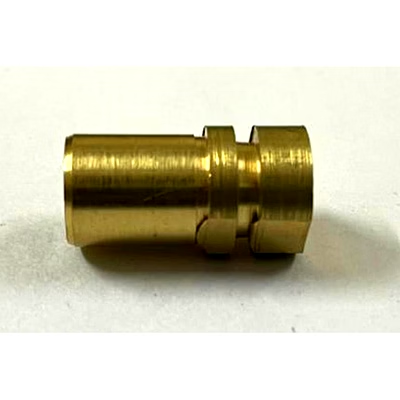
Insert For Motor Coupling Of Jmg
Insert For Motor Coupling Of Jmg
This insert is intended for motor coupling applications in JMG equipment assemblies where secure shaft engagement and repeatable alignment are required. It suits OEM integration and scheduled maintenance programs that need consistent interface geometry and reliable torque transfer. Production is offered as drawing-based builds with inspection checkpoints for acceptance.
The component is processed using precision turning and finishing to maintain bore concentricity and interface features. Supply options include prototyping through volume production and documentation packages for procurement review.
Price upon request

Insert For Motor Coupling Of Juicer
Insert For Motor Coupling Of Juicer
This coupling insert is a precision component intended for motor-to-rotor connections in juicer and small appliance assemblies. It is designed to transmit torque reliably while maintaining concentricity and fit in pressed or machined housings. The component is supplied to OEM and aftermarket assembly workflows that demand repeatable fit and secure drive engagement.
Manufacturing follows CNC turning and controlled finishing to maintain bore and keyway geometry. Batch inspection and packing tailored to appliance assembly lines are provided. Build-to-print production and small-run prototyping scale into production volumes as required.
Price upon request
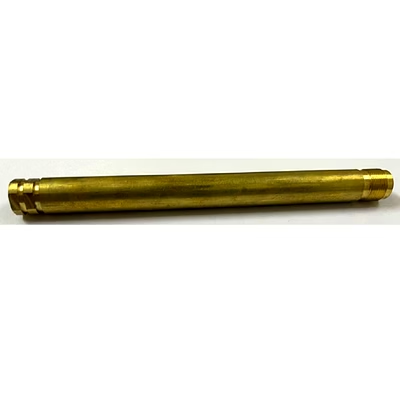
Shaft Body For Hand Blender
Shaft Body for Hand Blender Assemblies
The shaft body is a key mechanical component in hand blender assemblies that transmits motor torque to the blade. It must meet dimensional and concentricity requirements to avoid vibration and ensure assembly balance.
Procurement teams should provide shaft dimensions, bore fits, and material preferences to ensure compatibility with motor coupling and blade assemblies. Volume forecasts allow manufacturing to plan production batches and inspection checkpoints.
Share drawings and expected volumes for accurate lead-time and costing estimates. Supply can include dimensional inspection reports as part of delivery.
Price upon request
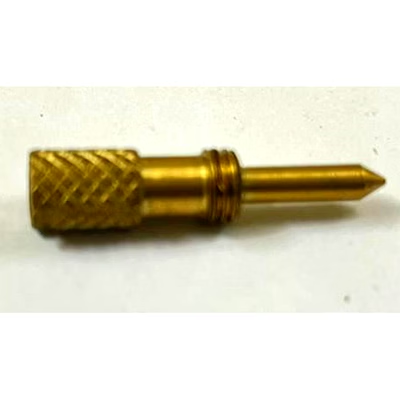
Pin Fuel Injection System
Precision Pin for Fuel Injection Systems
This precision pin is intended for use within fuel injection systems and nozzle assemblies. It must meet tight dimensional and surface-finish requirements to ensure reliable fuel metering and seating within the injector assembly.
Procurement should specify diameter, length, surface finish, and material constraints so manufacturing can validate fit and performance. Volume forecasts enable production planning and the inclusion of inspection checkpoints as part of delivery.
Provide detailed drawings and functional requirements to obtain accurate lead-time and quoting information for production runs.
Price upon request
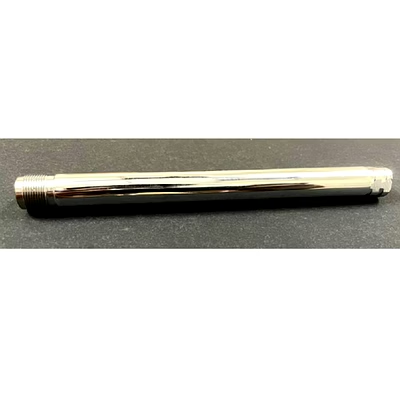
Pipe Body For Hand Blender
Pipe Body for Hand Blender Assemblies
The pipe body serves as the main housing section in a hand blender, enclosing the shaft and providing user-facing geometry. It must meet dimensional, finish, and assembly-interface requirements for correct fit and aesthetic presentation.
Buyers should specify external dimensions, connection points, and finish requirements to guide manufacturing setup and inspection planning. Providing these details supports accurate quoting and ensures compatibility with existing assembly fixtures.
Volume-oriented production with inspection reporting is available to meet OEM supply requirements.
Price upon request
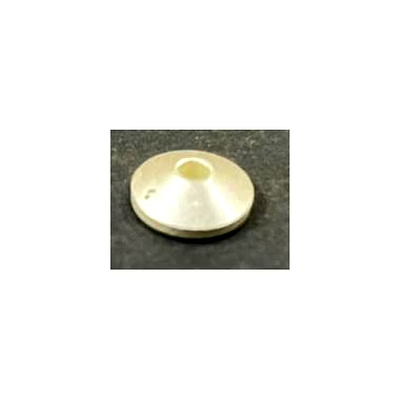
Silver Plated Contact For Relays
Silver Plated Contact for Relay Switching
Silver plated contacts are used in relay and switching applications where low contact resistance and reliable conductivity are required. The silver plating improves electrical performance and reduces contact wear in low-current switching cycles.
Procurement teams should specify contact geometry, substrate material, and anticipated current/voltage to align plating thickness and contact finishing. Batch supply can include inspection reporting covering plating thickness and dimensional conformity.
Provide drawings and electrical requirements to obtain production planning and lead-time information.
Price upon request

Ss 304 Nut For Hand Blender
SS 304 Nut for Hand Blender Assemblies
This SS 304 nut is intended for use in handheld blender assemblies and appliance fittings where corrosion resistance and part fitment are required. Stainless steel 304 provides general corrosion resistance suitable for household and light industrial contact with liquids.
Procurement should confirm thread size, pitch, and mating component dimensions when requesting quotes. These details drive tooling setup and inspection criteria for batch production. Supply options include volume-oriented runs with inspection records to support incoming quality control.
Provide part drawings and expected volumes to obtain lead-time and pricing estimates aligned to production capability.
Price upon request

Phosphorus Bronze Pin
Phosphorus Bronze Pin
This phosphorus bronze pin is specified for electrical contact, connector, and low-friction bearing applications. Its material selection provides good conductivity and wear resistance where sliding contact and repeated insertion cycles occur. Typical buyers include OEM electrical assembly teams, connector manufacturers, and maintenance procurement for rail and industrial connectors.
Production uses controlled turning and finishing processes with inspection checkpoints covering dimensional conformity and surface condition. Volume supply and batch documentation options are available to support qualification and restocking needs.
Price upon request

Etp Copper Contact Pin For Railway Connector
ETP Copper Contact Pin For Railway Connector
This ETP copper contact pin is specified for railway connector and signaling applications where electrical conductivity and wear resistance are required. The material choice supports reliable contact performance under repeated cycles and environmental exposure typical of rail systems. Buyers include rail OEMs, signaling equipment manufacturers, and maintenance teams responsible for connector upkeep.
Production uses controlled machining and finishing to maintain contact geometry and surface condition. Batch material certificates and inspection documentation support qualification and restocking programs.
Price upon request
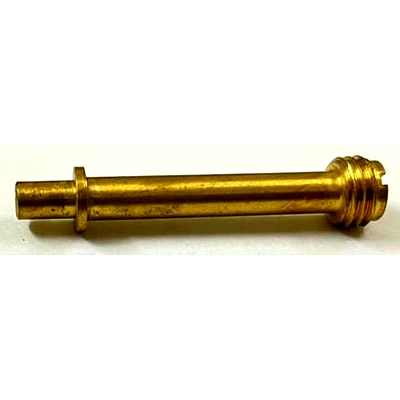
Injection System Pin
Injection System Pin
This injection system pin is a precision fast-fit component designed for use in various injection and dispensing assemblies. It is intended for OEM production lines, assembly houses, and repair operations that require consistent locating and actuation behavior. Manufacturing emphasizes dimensional control and surface finish to preserve interface performance.
Production workflows include CNC machining and finishing, with inspection and batch traceability to support procurement qualification. Volume supply and prototype options are available for integration testing and pilot runs.
Price upon request
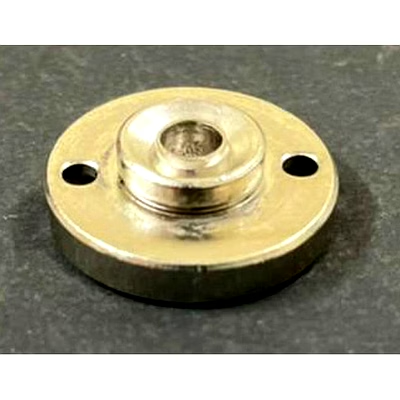
Backing Shell For Relay
Backing Shell For Relay
This backing shell is a precision component used in relay housings and switching assemblies. It provides mechanical support, correct alignment, and secure mounting interface for relay internals. Typical buyers include OEM electrical assembly teams, relay manufacturers, and maintenance procurement that require consistent fit and finish for switching modules.
Manufacture uses controlled forming or machining depending on material and geometry, with inspection checkpoints for dimensional conformity. Volume supply and build-to-print options support production and service replenishment programs.
Price upon request
Material grades and batch consistency
Precision Machined Components Manufacturer guidance centers on material-grade consistency and documented traceability to ensure repeatable assembly performance.
- Group parts by material family to match heat-treatment and corrosion resistance needs
- Include material certificates in RFQs to confirm batch uniformity
Surface finish and fit considerations
Surface finish selection is a primary decision driver where sealing, bearing contact or mating fits are involved; finish options affect both cost and function.
- Specify finish class relative to mating parts rather than micron tolerances in early RFQs
- Consider plating or coating needs for corrosion or wear protection
Application-fit and variant grouping
Group components by application role—rotating shafts, static brackets, threaded fittings—to streamline qualification and inventory planning.
- Organize part families to reduce changeover and spare-part complexity
- Match component grade to operational stresses and service intervals
Procurement checklist for RFQs
Include drawings, material callouts and expected annual volumes to obtain accurate quotations and lead-time estimates.
Faqs
Q: How are minimum orders managed for precision component batches?
A: MOQ is set by part complexity and batch tooling needs; provide forecasted volume to discuss tiered MOQ options.
Q: What drives cost differences between component runs?
A: Cost drivers include material grade, cycle time, surface finish and secondary operations such as heat treatment.
Q: Which quality certifications are commonly provided with components?
A: Provide ISO 9001:2015 details and request material test reports and inspection records as part of RFQ submission.
Q: How are bulk shipments packaged and delivered for components?
A: Packaging is arranged by part family and protective requirements; palletization and documentation are confirmed during order planning.